Many businesses no longer operate from just one location or sales channel.
A customer might discover a product on Instagram, purchase it through the company website and later visit the physical store. Another customer may walk into the store, while someone else places an order online and collects it in person.
For businesses operating across these channels, managing payments separately can quickly become complicated.
This is where online and in-person payments come together.
Instead of treating e-commerce and physical payments as completely separate systems, an omnichannel payment approach allows businesses to manage transactions across different customer touchpoints more efficiently.
For Malaysian SMEs, this can mean accepting payments through a website while also accepting payments at the counter using solutions such as CHIP Mini.
The objective is simple: give customers flexibility in how they buy and pay, while giving business owners better visibility over their transactions.
What Are Online and In-Person Payments?
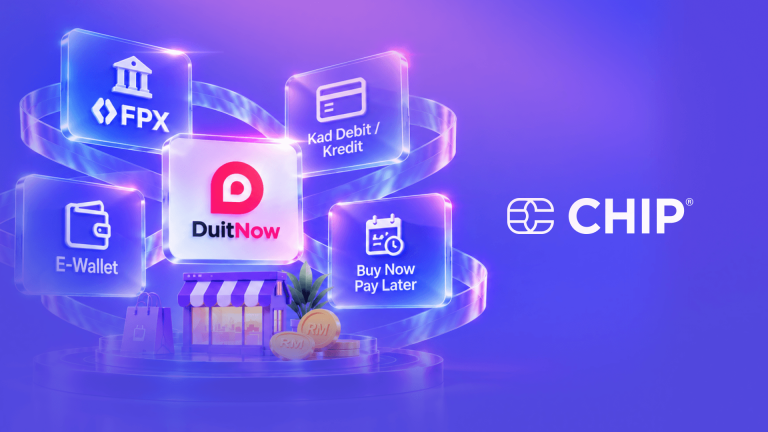
Online payments are transactions completed through digital channels such as a business website, online store, payment link or social media.
Examples include:
- FPX
- Credit and debit cards
- DuitNow QR
- E-wallets
- Payment Links
In-person payments happen when customers purchase directly at a physical location.
For example:
Customer → Walks into store → Selects product → Scans QR → Completes payment
An SME that operates both online and offline therefore needs to think beyond a single payment channel.
The goal is to create a payment system that works wherever the customer chooses to interact with the business.
Why Should SMEs Accept Payments Both Online and In-Person?
Having both online and physical payment capabilities can give businesses greater flexibility.
Customers can buy wherever they prefer
Some customers prefer shopping through a website.
Others want to visit a physical store, see the product and make a purchase at the counter.
Supporting both channels means the business does not have to force every customer into the same buying journey.
Businesses can reach more customers
An online store allows a business to reach customers beyond its physical location.
At the same time, a physical outlet provides opportunities for walk-in sales and face-to-face interactions.
Combining both creates more opportunities to generate revenue.
It supports an omnichannel customer journey
Customers do not always follow a straight path from discovery to purchase.
They may:
- Discover a product online
- Visit a physical store
- Make a purchase at the counter
- Return to the website later
- Buy another product online
A payment infrastructure that supports multiple channels makes these journeys easier to manage.
The Problem with Managing Online and Offline Payments Separately
A business can technically use one system for its website and another for its physical outlet.
However, this can create unnecessary complexity.
For example:
Website → Payment System A
Physical Store → Payment System B
Now the business owner may need to check two dashboards, reconcile two sets of transactions and monitor different payment records.
As sales increase, this can become harder to manage.
A more centralised approach can provide better visibility.
Instead of:
Online sales + Offline sales = Separate payment records
the business can work towards:
Online sales + Offline sales = Consolidated payment visibility
This is particularly useful for SMEs that are expanding across multiple sales channels.
What Is an Omnichannel Payment Strategy?
An omnichannel payment strategy means allowing customers to pay through different channels while maintaining a more connected payment operation behind the scenes.
For example:
Online
Customer visits website → Adds product to cart → Pays online
In-person
Customer visits store → Purchases product → Pays at counter
The customer experiences two different buying environments, but the business can work towards managing both through a more unified payment infrastructure.
This is different from simply accepting multiple payment methods.
Multichannel payments mean customers have different ways to pay.
Omnichannel payments go a step further by connecting payment experiences across different sales channels.
What Does This Look Like for a Malaysian SME?
Consider a small fashion business.
The business has:
- An e-commerce website
- An Instagram accounts
- A physical outlet
- Occasional pop-up booths
A customer may discover a product through Instagram and purchase it through the website.
Another customer may visit the physical outlet and purchase the same product at the counter.
At a pop-up event, another customer may scan a QR code to pay.
The business is therefore accepting payments in several different environments.
Without a structured payment solution, managing these transactions separately can create additional administrative work.
With an omnichannel approach, the business can aim to consolidate payment collection and reporting across these touchpoints.
How CHIP Supports Online and In-Person Payments
For SMEs looking to connect online and physical payment collection, CHIP provides payment solutions that support both environments.
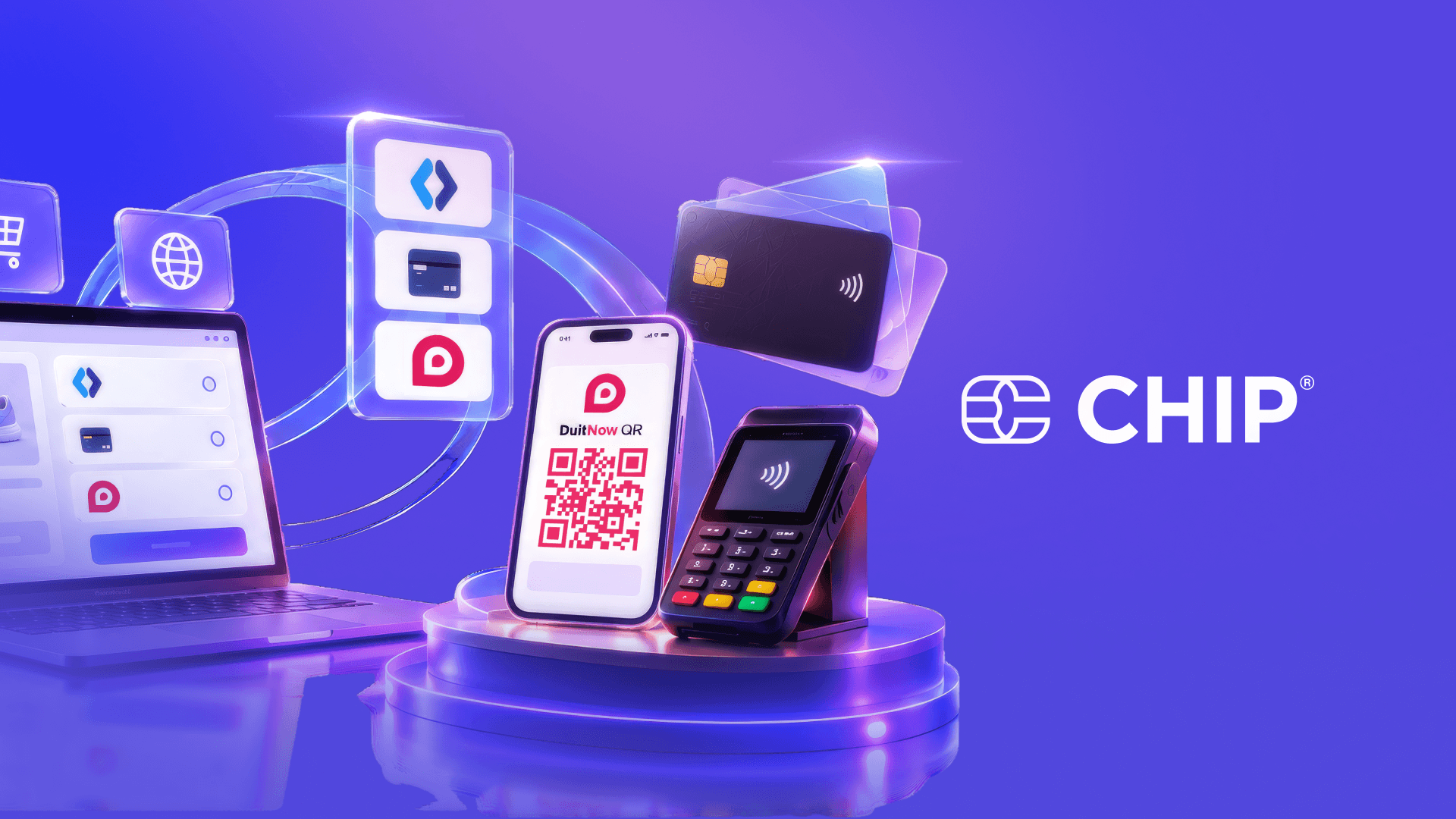
Businesses can accept online payments through their website while using CHIP Mini to accept DuitNow QR payments at a physical store.
This means a business does not necessarily need to treat its online and offline payment operations as completely separate.
Online payments
For website sales, businesses can offer payment methods such as:
- FPX
- Credit and debit cards
- DuitNow QR Online
- E-wallets
- Other supported payment options
Customers can complete their purchases directly through the online checkout.
In-person payments with CHIP Mini
For physical outlets, CHIP Mini allows businesses to accept DuitNow QR payments using a phone, without requiring additional payment hardware.
The customer can simply scan the QR code and complete the transaction digitally.
This can be useful for:
- Retail stores
- Cafés
- F&B businesses
- Salons
- Clinics
- Service providers
- Pop-up stores
- Event booths
For a small business, being able to use a phone for in-person QR payments can make digital payment adoption more straightforward.
One Merchant Account, Multiple Customer Touchpoints
One of the key advantages of connecting online and in-person payments is reducing fragmentation.
Instead of thinking:
“My website payments are one business activity and my physical payments are another.”
business owners can think about them as different parts of the same customer journey.
For example:
Website → Online payment
Physical outlet → CHIP Mini
Social media → Payment Link
These can represent different ways customers interact with the same business.
A more connected payment setup can make it easier to monitor overall collection activity and understand where payments are coming from.
Why Consolidated Payment Reporting Matters
As a business grows, transaction visibility becomes increasingly important.
Imagine an SME processing:
- RM10,000 from website sales
- RM5,000 from physical store sales
- RM2,000 from events
If each channel uses a different payment system, the owner may need to manually combine the numbers to understand total collection.
With consolidated reporting, businesses can have a clearer view of payment activity across channels.
This can help with:
Reconciliation
Business owners can more easily compare payment records with sales activity.
Reporting
Management can review online and offline collection in a more structured way.
Cash flow visibility
Knowing how much has been collected across different channels can support better financial planning.
Business decisions
Transaction data can help owners understand which sales channels are generating more activity.
Online-to-Offline: More Than Just Accepting Payments
The transition from online to in-person is not only about payment processing.
It is about creating a connected customer experience.
Consider a customer who:
- Discovers your business through social media
- Visits your website
- Makes an online purchase
- Visits your physical store
- Makes another purchase in person
The business should be able to support that customer regardless of where the transaction happens.
This is why omnichannel payment infrastructure is becoming increasingly relevant for SMEs that operate across different channels.
Which Businesses Can Benefit from Online and In-Person Payments?
Retail Businesses
Retailers with both e-commerce websites and physical outlets can allow customers to shop and pay through whichever channel is most convenient.
F&B Businesses
Restaurants, cafés and food businesses can accept payments online for orders and digitally at the counter.
Service Businesses
Salons, clinics, consultants and other service providers can collect payments online before an appointment and accept in-person payments when customers visit.
Pop-Up and Event Businesses
Businesses that sell at events can use digital payment methods without needing to build a complete physical payment infrastructure.
Social Commerce Businesses
Businesses selling through Instagram, Facebook, WhatsApp or other social channels can direct customers to online payment options while still accepting payments at physical events or outlets.
What Should SMEs Consider Before Going Omnichannel?
Before implementing an online and in-person payment setup, consider the following.
1. Where do your customers buy?
Understand whether your customers primarily purchase through:
- Website
- Social media
- Physical store
- Events
- Multiple channels
2. Which payment methods do they prefer?
Your payment options should match actual customer behaviour.
For Malaysian customers, this may include:
- FPX
- DuitNow QR
- Cards
- E-wallets
- Payment Links
3. How are transactions currently recorded?
If online and offline transactions are stored separately, consider whether a more consolidated reporting structure could reduce manual work.
4. How easy is it for staff to use?
A payment solution should be practical for the people using it every day.
For physical businesses, being able to accept QR payments through a phone can remove the need for additional hardware.
5. Can the system grow with the business?
Your payment setup should not only work for your current sales volume.
Consider what happens when you add:
- Another outlet
- A new website
- More sales channels
- Events
- New products
- International customers
A scalable payment infrastructure can make future expansion easier.
From Online to In-Person: A Practical Setup for SMEs
A business does not need a complicated system to start connecting its sales channels.
A simple setup could look like:
| Sales Channel | Payment Solution |
| Website | Online payment checkout |
| Social Media | Payment Link |
| Physical Store | CHIP Mini / DuitNow QR |
| Event or Booth | CHIP Mini / QR |
| Multiple Channels | Consolidated payment reporting |
The exact combination depends on the business model and customer behaviour.
The important thing is to build a payment experience that follows the customer rather than forcing the customer to follow the payment system.
Why Omnichannel Payments Matter as Your Business Grows
A business might start with one website and a single physical outlet.
But growth can introduce more complexity.
You may eventually have:
Website + Store + Pop-Up + Social Media + Marketplace
Each additional channel creates another opportunity to sell, but it can also create another payment process to manage.
Building an omnichannel payment strategy early can help businesses avoid unnecessary fragmentation later.
It also gives business owners a clearer view of how customers are paying across different parts of the business.
From Online to In-Person With CHIP
For SMEs operating both online and offline, the payment experience should not stop at the website.
Customers may discover your products online, purchase them through your website or walk into your physical store and pay at the counter.
With CHIP, businesses can support these different payment touchpoints through solutions such as online payment collection and CHIP Mini for in-person DuitNow QR payments.
The benefit is not simply having more payment options.
It is about creating a more connected payment infrastructure that can support the way modern SMEs actually sell.
As your business expands from one sales channel to several, having payment collection and reporting that can support both online and offline transactions can help keep operations more organised.
Ready to connect your online and in-person payments? Explore CHIP’s payment solutions and build a payment setup that grows with your business.